
As the weather transitions into warmer months, sales demand does not increase proportionally. Instead, there is a shift in sales demand due to outdoor activities, seasonal products and goods and apparel related to current events. While there is more opportunity for retailers to drive sales in warm weather months, there is also more risk in over-selling and the subsequent need for markdowns and clearance sales. By studying the changes in customer behavior, retailers can take steps to increase sales while decreasing loss.
What is the difference between dead stock and hot stock? Quite simply the difference exists because of how a company manages their product on a seasonal basis.
For retailers whether on a day to day basis or with seasonal fluctuations, understanding these factors is crucial.
Understanding Warm-Weather Demand Shifts
Whatever time of the year it is for you, there is a definite shift in customer buying patterns – whether it’s the start of spring/summer or back to school, people suddenly appear in stores searching for ways to enjoy the good weather, planning a vacation or looking to enhance their lifestyle.
For many businesses, tracking seasonal trends is crucial to planning and profitability. While there is obviously a typical or expected “season” for most product categories, reality can vary from year to year and even from month to month. What drives demand and how can you make the best seasonal inventory decisions for your business?
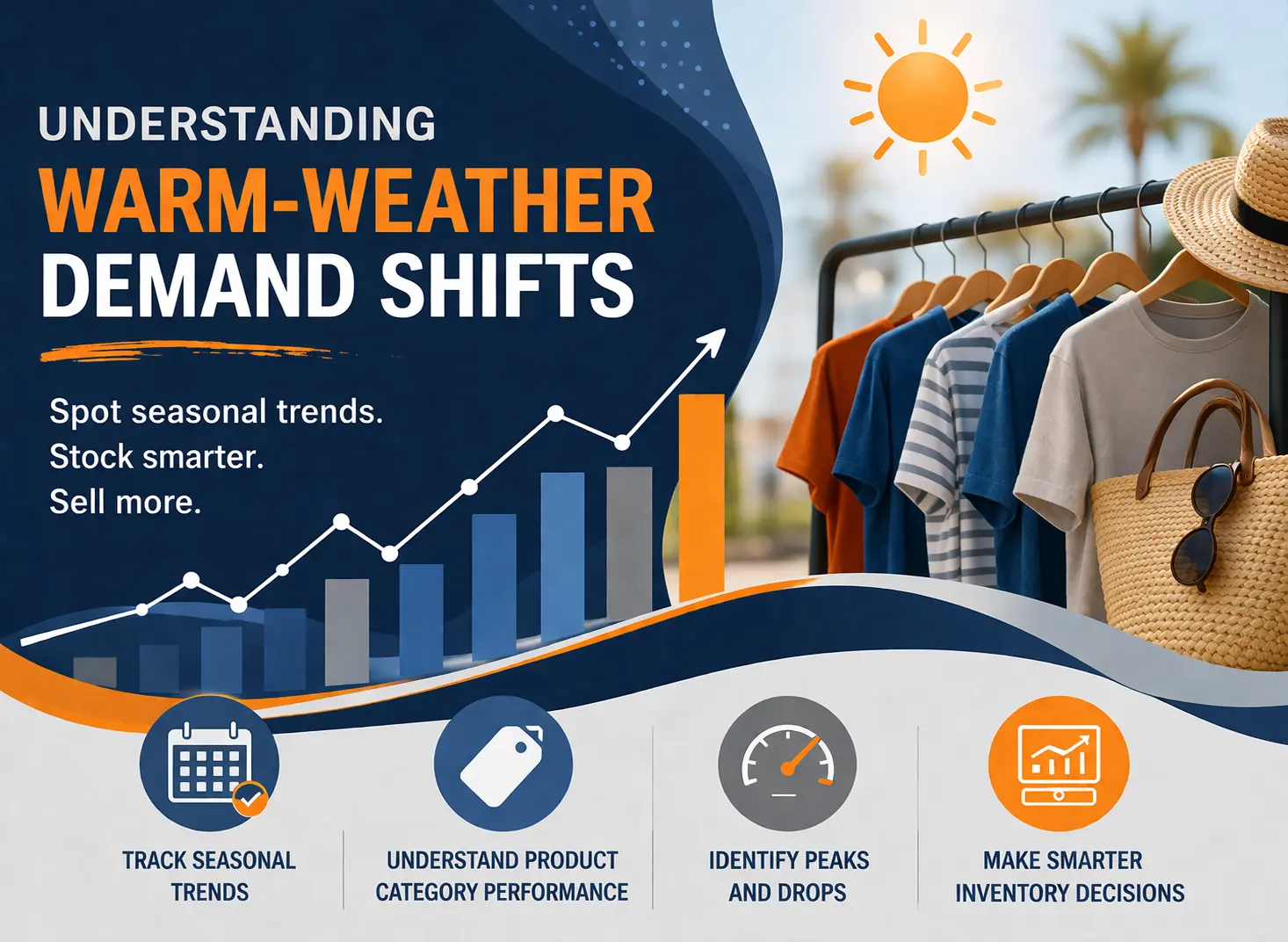
For those retailers that rely on past sales data to predict future activity, the answer to the above question is simply: You won’t know when demand will occur this season. By understanding the timing, product categories and sales velocity of peaks and drops in past demand, retailers can respond to the unique requirements of this season. A well-designed retail point of sale system can process the data and even summarize key insights for the retailer enabling them to better understand historical sales trends and apply that information to forecast future trends.
The Risk of Getting It Wrong
Seasonal inventory presents even greater risks than regular inventory due to the fact that products go-out-of-season more quickly. If you miscalculate demand for a product before it goes in-season, by the time the next season rolls around, the product will be hot for the past season not the current one. Conversely, if you miscalculate demand and forecast too high for a seasonal product, you can end up with inventory that has lost value before you have a chance to sell it.
Excess inventory accounts for around 38% of total stock levels within retail businesses, tying up valuable capital that could be released to sell more product at margin.
In order to successfully sell warm weather products, companies must avoid the trap of a single misjudged season or sell through. As time passes, inventory can rapidly decay in value resulting in discounted sales that are often less than desirable. As a result, achieving success with seasonal inventory management is paramount to the overall achievement of warm-weather products.
Turning Seasonal Inventory into Opportunity
While some products will reach new heights and far exceed your sales goals, others will fall short. Analyzing sales performance and making adjustments as quickly as possible is crucial to preventing decline.
Most successful retailers are not waiting until the end of a season to handle their seasonal product inventories. They spend their time all season monitoring sales and making adjustments as needed. Instead of letting a slow summer slip into unsalable out of season merchandise, a retailer can remargin a slow shoe product and market it with a clever point of sale bundle.
You don’t have to get too creative to move off the shelf merchandise. Simply make a few operational changes to how the merchandise is presented, labeled, seasonalized or promoted. Give some away at a deep discount for a limited time. The sooner you take your shot, the less risk there is of your inventory turning against you.
Our solution to the retailer provides analysis of the best and worst selling products and enables swift action to capitalize on sales of popular items and to reduce slow selling inventory.
Timing Purchases with Precision
For retailers, there is a window to optimize the timing of inventory purchases during seasonal times of the year. If products are purchased too early in the season, the retailer is left holding onto dollars that could have been more productively utilized later in the season. Conversely, if products are purchased too late in the season, the retailer may miss-out on peak sales opportunities.
According to the National Retail Federation, seasonal shifts like spring and summer drive significant changes in consumer behavior, with categories tied to outdoor activity, travel, and home improvement seeing consistent demand spikes as temperatures rise.

However, it is crucial for retailers to be as forecasters and as flexible as possible in order to meet demand but without running the risk of overstocking or understocking. By analyzing real-time sales data, retailers can adjust their purchasing decisions as demand for product increases. Meanwhile, the supplier’s lead time becomes irrelevant to making these immediate purchasing decisions.
Have real-time visibility into current and future sales so retailers can make decisions in real time as the season unfolds, rather than relying on forecasts that often turn out to be inaccurate.
Why Real-Time Visibility Matters
Seasonal inventory management requires more visibility than many current retail software programs offer. Without sufficient visibility into your products’ current and historical inventory data, many of your corporate and store-level decisions will be suboptimal.
Today’s modern inventory systems offer great insight to retailers, enabling them to see what is happening throughout their organization. They have real-time access to data that describes the current state of the business, information that can detail out the location of products throughout the organization, as well as the current sales trends and velocities. As a result, they can dynamically respond to any increases or decreases in demand, shifting products to those SKUs driving the highest sales.
We have seen the benefits that a solution such as Rapid POS can bring in terms of bringing all of this information together enabling the retailer to better manage the business during the key trading season.
Learning from Every Season
Seasons are learnable. It doesn’t matter which one you’re in and how much you’re enjoying it. The better you’re going to be in the next season is exactly how you perform the analysis of the last season.
Understanding sold through products, discounted items and accuracy of forecast is crucial for Companies to better sell through seasonal products in the future in a more organized and efficient way.
The goal isn’t perfection—it’s continuous improvement.

From Dead Stock to Hot Stock
Seasonal product sales can prove a valuable opportunity for a retailer during the summer months; however, this same season can soon turn cold and result in a mountain of dead stock if the retailer fails to plan and manage the appropriate levels of inventory.
Make the right products in season available at the right time without over investing in inventory. Our solutions incorporate historical seasonal data, real-time information and dynamic decisioning to help retailers meet demand and maximize sales during the highest volume buying seasons of the year.
Ready to Take Control of Your Seasonal Inventory?
If you’re looking to improve how your business handles seasonal demand, it starts with better visibility and smarter decision-making. Rapid POS gives you the tools to track trends, manage inventory in real time, and stay ahead of shifting demand—so you can turn every season into an opportunity for growth.
Schedule a demo today and see how the right system can transform your seasonal inventory strategy.
