From POS Data to Supply Chain: How Customer Buying Patterns Drive Better Retail Decisions in 2026

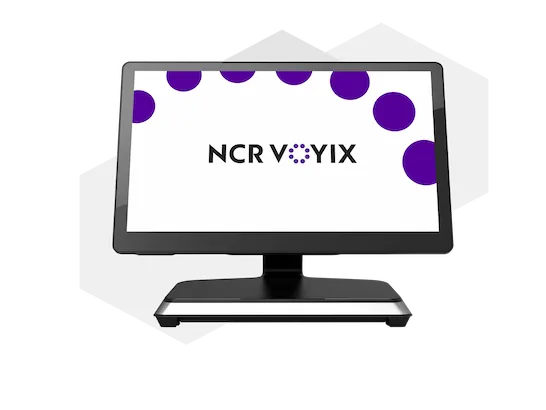
NCR Voyix terminal powered by Counterpoint and Rapid POS.

Ready to take control of your inventory, prevent stockouts, and make smarter supply chain decisions? Start leveraging your POS data today!

In today’s fast-moving retail landscape, supply chain efficiency isn’t just a competitive advantage — it’s a necessity. Retailers face constant pressure to keep shelves stocked without tying up excess capital in inventory, avoid stockouts that frustrate customers, and adapt quickly to changing buying behavior.

Yet many retailers still operate with limited visibility into what’s actually driving demand. Decisions are often made using outdated reports, static reorder points, or gut instinct. This lack of real-time insight leads to excess inventory, missed sales, and inefficient purchasing. When used strategically, point-of-sale (POS) systems change that by turning everyday transactions into actionable supply chain intelligence.

The Cost of Limited Supply Chain Visibility

Without real-time data, supply chains become reactive. Retailers struggle to forecast demand accurately, overorder slow-moving products, and rush to restock bestsellers too late. According to PYMNTS Intelligence, over 65% of retail merchants lack access to real-time supply chain data, despite the majority saying it’s critical for decision-making.

These blind spots add up quickly. Stockouts alone cost retailers nearly 4% of annual sales, while excess inventory ties up cash and increases storage and handling costs. POS data helps close these gaps by offering continuous visibility into what customers are actually buying.

Why Buying Patterns Matter

Buying patterns reveal far more than daily sales totals. They show which products sell fastest, how demand changes by season or promotion, and how customer behavior varies by location or channel. POS systems capture this data automatically, creating a real-time feedback loop between sales and supply chain operations.

Retailers that analyze buying patterns through POS data can:

Retailers using real-time analytics report improved inventory accuracy and reduced discrepancies, leading to better customer satisfaction and fewer lost sales.

How POS Insights Improve Inventory Planning

Real-time POS data takes the guesswork out of inventory planning by replacing static reorder rules with flexible, demand-driven decisions. Instead of ordering products based solely on historical averages, retailers can respond in real time as customer buying behavior shifts. This leads to more accurate order quantities, fewer markdowns on slow-moving items, and lower carrying and storage costs.

reduce overstock
  • Clear visibility into customer buying patterns across locations and time periods, helping retailers anticipate demand before it disrupts the supply chain

  • Smarter coordination between inventory, purchasing, and distribution, ensuring the right products move through the supply chain at the right pace

 When paired with predictive analytics, POS insights can reduce both stockouts and excess inventory by as much as reduce both stockouts and excess inventory by up to 30%, helping retailers align supply with what customers are actually going to buy — not what they bought in the past.

How POS Data Makes Purchase Orders Easier and More Accurate

One of the most immediate and practical benefits of POS-driven insights is how much easier they make purchase order (PO) creation.

Traditionally, purchase orders are built using spreadsheets, fixed reorder points, or manual inventory counts. These methods are time-consuming and often inaccurate, especially when demand fluctuates. POS data eliminates this friction by directly connecting real-time sales trends to purchasing decisions.

When products begin selling faster than expected, reorder thresholds can automatically adjust, triggering purchase orders before shelves run empty. Slow-moving items, on the other hand, stop generating unnecessary reorders, preventing overstock.

Retailers using data-driven replenishment processes have seen ordering errors drop by up to 30% and purchasing cycles accelerate by as much as 25%. Automated or POS-assisted POs also improve supplier relationships by creating more predictable ordering patterns and fewer last-minute rush orders.

By grounding purchase orders in real buying patterns, retailers transform purchasing from a reactive task into a strategic advantage.

Checklist: Is Your POS Built for Supply Chain Efficiency?

As you evaluate how well your POS supports your supply chain, ask these key questions:

A POS system that checks these boxes doesn’t just record sales — it actively supports smarter supply chain decisions.

The Real-World Impact of POS-Driven Supply Chains

Retailers that leverage POS data effectively report measurable improvements, including:

Turn POS Data into Supply Chain Strength

POS data on buying patterns isn’t just a record of past sales — it’s a powerful tool for streamlining your supply chain. By using real-time insights to plan inventory, forecast demand, and simplify purchase orders, retailers can reduce costs, improve agility, and consistently meet customer expectations.

Don’t wait for inefficiencies to impact your bottom line. Start using your POS data today to build a smarter, more responsive supply chain.

Picture of Sammi Palencia

Sammi Palencia

Sammi Palencia is a Sports Business student at Arizona State University who loves learning how businesses operate and serve their customers. She enjoys sharing practical insights in a way that makes business concepts easy to understand, helping others see the “why” behind everyday operations.

We use cookies to enhance your experience. See our Privacy Policy.